


If your dog has been through round after round of antibiotics, prescription diets, and vet visits with no lasting relief, you are not alone, and you are not out of options. The problem might not be what you are feeding your dog. It might be what is missing deep inside their gut.
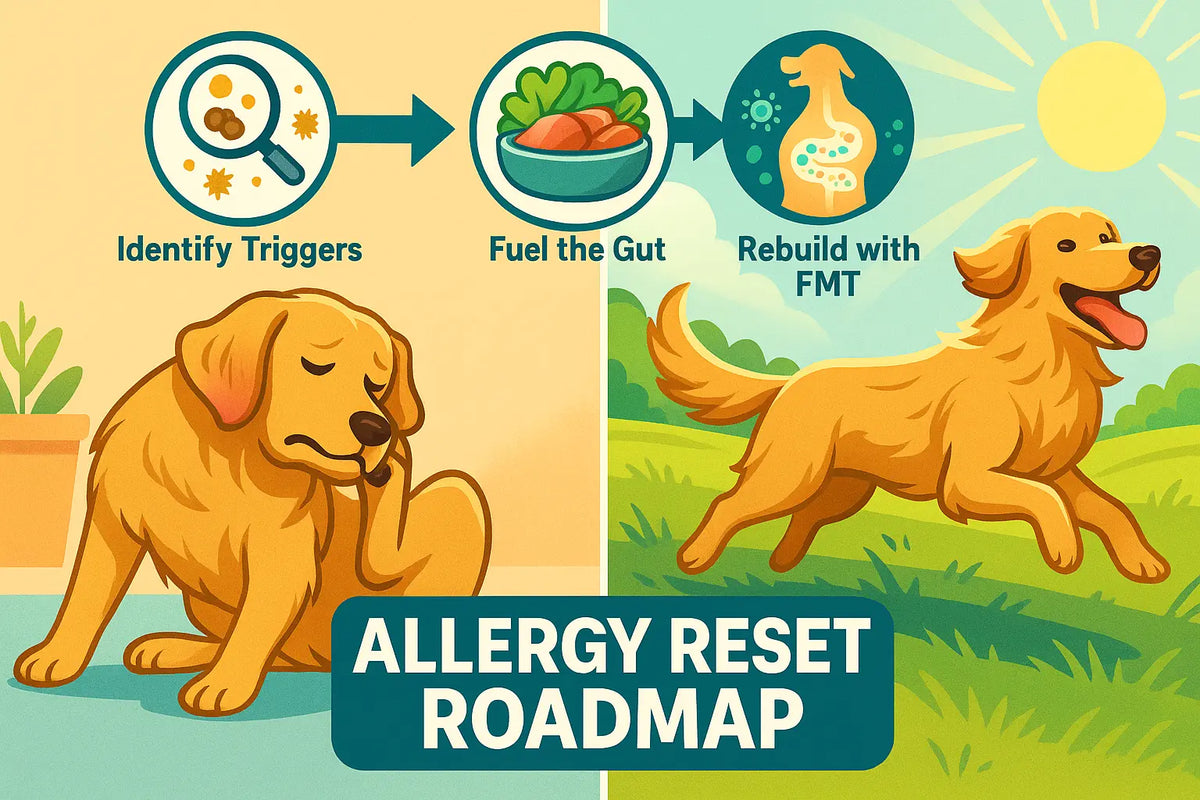
FMT for dogs, short for fecal microbiota transplantation, works differently from anything else your vet has likely tried. Instead of suppressing symptoms or killing bacteria, it rebuilds the microbial community your dog's gut has lost. This guide covers what fecal microbiota transplantation actually is, which conditions it helps with, how gut restore supplements are delivered, and what the research says about results in dogs.
What Is FMT for Dogs?
Fecal microbiota transplantation, also called FMT, is the transfer of fecal material from a healthy donor dog into the GI tract of a dog whose gut microbiome has collapsed. Think of it as a full microbial reboot, not a supplement, not a probiotic, but a living transplant of billions of diverse, dog-specific bacteria delivered directly where they are needed.
Here is a simple way to picture it. Imagine a thriving garden that has been wiped out by a bad frost. You can water the soil and add fertilizer, but if the seeds are gone, nothing grows back on its own. You have to reintroduce them. A dog's intestinal microbiome works exactly the same way. Intestinal dysbiosis, which is the clinical term for a gut microbiome that has lost its balance, does not always self-correct with diet changes alone. Either fecal microbiota transplantation or a quality gut restore supplement reintroduces the dog-specific microbes and certain important gut bacteria that standard probiotics simply cannot replicate.
FMT has roots going back centuries in both human and veterinary medicine. In human medicine, it became widely recognized after a landmark success against Clostridium difficile infection in humans, a condition where gut bacteria become so depleted that dangerous pathogens take over. Research in human medicine has since expanded into gastrointestinal disorders, metabolic conditions, and even psychiatric disorders connected to gut-brain signaling. In veterinary medicine, a version of this process called transfaunation has been used in large animals for generations, and today fecal microbiota transplantation is an established part of clinical practice for companion animals, including dogs and cats.
What Conditions Can FMT Help in Dogs?
FMT for dogs has been studied across a range of gastrointestinal disorders and immune-related conditions, with the strongest clinical evidence concentrated in the following areas.
Chronic Enteropathies and Inflammatory Bowel Disease
Chronic enteropathy is one of the most common and frustrating diagnoses in small animal internal medicine. It covers a whole spectrum of chronic GI disorders, including food-responsive diarrhea, antibiotic-responsive diarrhea, and idiopathic inflammatory bowel disease. Dogs with chronic digestive issues like these all share one thing: the gut microbiome is out of balance, and conventional treatment often fails to reestablish balance at the microbial level.
In a retrospective case series of 41 dogs with chronic enteropathies who had not responded to standard treatment, FMT as adjunctive therapy produced significant improvement across a follow-up period of 3 to 41 months. For dogs caught in the loop of immunosuppressants and diet trials, a gut restore supplement offers a biologically different mechanism of action than anything else in the treatment toolkit.
Acute Diarrhea, Chronic Diarrhea, and Post-Antibiotic Dysbiosis
Here is something most pet owners do not realize. Antibiotics are often the first response to acute diarrhea in dogs, but they frequently make the underlying problem worse. A study comparing FMT to oral metronidazole found that a single fecal transplant matched antibiotic treatment for fecal score improvement, and by day 28, dogs in the FMT group had better fecal consistency and dysbiosis index scores than those on metronidazole.
Post-antibiotic dysbiosis is where a gut restore supplement makes a difference. A broad-spectrum antibiotic course can wipe out certain important gut bacteria, including secondary bile acid-producing species that protect the intestinal mucosa and keep harmful bacteria in check, for weeks or even months after the prescription ends. Secondary bile acids matter more than most people realize. The beneficial microbes that produce them help regulate inflammation, seal the gut lining, and suppress pathogenic overgrowth. When those bacteria are gone, the consequences go well beyond loose stool. A fecal microbiota transplant restores those fecal microbial populations directly, without adding more antimicrobial pressure to a gut that is already struggling.
For dogs with chronic diarrhea that keeps coming back no matter what you try, this is often why. The gastrointestinal microbiome never fully recovered.
Canine Parvovirus Infection
Parvovirus infection is one of the most devastating things a young dog can face. It tears through the intestinal mucosa, causes severe disruption of the gastrointestinal microbiota, and brings on rapid weight loss alongside acute hemorrhagic diarrhea. The clinical course without aggressive intervention is serious.
A randomized clinical trial evaluated 66 puppies with canine parvovirus infection and found that puppies who received FMT alongside standard treatment recovered from diarrhea in a median of 3 days, compared to 6 days for puppies on standard treatment alone. That is a 50% reduction in recovery time. In a parvovirus infection case, those three days translate directly into lower hospitalization costs and reduced risk of secondary complications.
Atopic Dermatitis and Itchy Skin
This is the one that surprises most dog owners. You would not immediately connect a dog's itchy skin to what is happening in their gut, but the research is detailed enough that you should.
Around 70% of the immune system lives in the GI tract. When the gastrointestinal microbiome is out of balance, the resulting inflammation does not stay in the gut. It surfaces in the skin, the ears, and the immune system overall. Dogs with atopic dermatitis consistently show lower gut microbial diversity compared to healthy dogs, with measurable differences in microbial composition between affected and unaffected animals. The gut-skin connection is real, and it is one of the reasons dogs with atopic dermatitis often seem allergic to everything.
Oral FMT capsule therapy has been evaluated specifically for canine atopic dermatitis, with clinical signs showing improvement alongside measurable shifts in gut microbial composition after treatment. For dogs on long-term allergy medications, a gut restore supplement that targets the gastrointestinal microbiome addresses the source of the immune imbalance rather than just managing itchy skin on the surface.
How Is FMT Delivered?
There are a few ways fecal microbiota transplantation can reach your dog's gut, and the method has come a long way. In a clinical setting, vets can deliver it via colonoscopy, endoscopy, or rectal enema. These work well for acute or severe cases, but they require a procedure and often sedation, which is not exactly convenient for ongoing treatment.
That is where oral gut restore supplements have become a preferred choice for many pet owners. You give your dog a capsule at home, no vet visit, no sedation, no stress. The enteric coating protects the beneficial microbes from stomach acid so they survive the trip and arrive where they actually need to be: deep in the intestines. Research confirms the clinical effects of oral capsule delivery match those of in-clinic procedures, so you are not trading convenience for results.
Inside the capsule, you will find freeze-dried donor fecal material, the most practical form for home use. It has a shelf life of up to two years and ships easily, which matters when your dog needs ongoing support for chronic digestive issues.
What Makes a Safe, High-Quality Gut Restore Supplement?
The quality of fecal donors determines everything, from how safe the product is to how well it actually works for your dog. Think of it this way. You would not accept a blood transfusion from just anyone. The same logic applies here. The fecal microbiome going into your dog needs to come from donor dogs that have been thoroughly vetted, not just dogs that seem healthy on the outside.
Here is what serious providers check, and what sets the Legacy Biome Donor Network apart.
- The donor has to be genuinely clinically healthy. Zero lifetime antibiotic use, no unnecessary NSAIDs or pesticides, minimally vaccinated, and monitored through antibody titer testing. Our donors are naturally born, fed species-appropriate raw proteins and fresh organic foods, and live in enriched environments that support their overall wellbeing.
- Pathogen screening has to be thorough. Donor feces are tested for Salmonella, Campylobacter, Giardia, Cryptosporidium, canine parvovirus, Clostridium difficile toxins, and intestinal parasites through independent, accredited veterinary labs.
- Microbial quality has to be assessed. DNA sequencing confirms actual diversity in every sample. Our donors come from a stable, multi-generational lineage selected specifically for superior microbiome health, so you are not just getting a clean sample. You are getting a rich one.
- Encapsulation has to protect the contents. Without enteric coating, beneficial microbes are destroyed by stomach acid before reaching the intestines. The capsule is not just packaging. It is what makes the whole thing work.
Where the donor lives and what they eat matters. Donor dogs raised on raw animal protein and whole foods, free from antibiotics, NSAIDs, and pesticides, produce supplements with far greater microbial diversity. Our donors also live in enriched, loving environments, because overall wellbeing shapes the gut too. Microbial changes in recipient dogs trace directly back to the donor. What that dog ate for breakfast is not a trivial detail.
FMT for Dogs and Cats: Why Species Match Matters
If you have both dogs and cats at home, this one is worth knowing. Fecal microbiota transplantation has been studied in both companion animals, and the results for chronic digestive issues are encouraging across both species.
The key point is simple. Dog-specific bacteria are native to the canine intestinal microbiome, and a gut restore supplement for dogs needs to come from canine fecal donors. The same goes for cats. Species-matched donor feces is what clinical guidelines recommend, and it is what actually works.
FMT as Adjunctive Therapy: Working With Your Vet
One thing worth being clear about. A gut restore supplement is not a replacement for your vet. Veterinarians in internal medicine use fecal microbiota transplantation as adjunctive therapy alongside existing treatment protocols, and that is exactly how it should be used. It works with medical management of canine inflammatory bowel disease or chronic inflammatory enteropathy, addressing the fecal microbiome side of things that medications alone cannot fix.
Clinical guidelines recommend either fecal microbiota transplantation or an ongoing gut restore supplement when standard treatments have failed or when long-term antibiotic use has created its own cycle of intestinal dysbiosis. The good news is that it is well-tolerated. Around 10 to 12% of dogs experience mild, temporary reactions in the first 24 to 48 hours, usually some flatulence or loose stool. Serious adverse events are rare, and most dogs with mild initial clinical symptoms improve on their own within one to three treatment cycles.
Ready to Rebuild From the Inside Out?
If your dog has been stuck in a cycle of chronic digestive issues, recurring itchy skin, or diarrhea that keeps coming back, the gut microbiome is worth taking seriously. Probiotics pass through. Legacy Biome FMT takes root. It delivers the living, diverse, dog-specific bacteria your dog's gut has been missing and rebuilds from the inside out. Talk to your vet about whether fecal microbiota transplantation is the right next step.
Frequently Asked Questions About FMT for Dogs
What does FMT stand for in dogs?
FMT stands for fecal microbiota transplantation. It is the transfer of processed donor feces from a healthy donor dog into the gut of a recipient dog to restore a balanced gut microbiome and clear up dysbiosis.
What conditions does FMT treat in dogs?
FMT treats chronic enteropathies, acute diarrhea, chronic diarrhea, post-antibiotic dysbiosis, canine parvovirus infection recovery, weight loss tied to chronic GI disorders, and atopic dermatitis connected to gut dysbiosis.
Is FMT safe for dogs?
Yes, when it comes from rigorously screened fecal donors and is used under veterinary guidance. Mild, temporary reactions show up in roughly 10 to 12% of cases. Serious adverse effects are rare.
How long does FMT take to work in dogs?
FMT takes about 1 to 2 weeks, as most dogs show improvement in fecal consistency and clinical symptoms. Dogs with severe or long-standing intestinal dysbiosis may need two to three months before the newly introduced microbial populations are fully settled in. Tracking the dysbiosis index before and after treatment gives the clearest picture of how things are progressing.
Can I give my dog a gut restore supplement at home?
Yes, oral gut restore supplements with enteric coatings can be given at home with no sedation and no veterinary procedure needed. Follow the directions and keep your vet in the loop, especially if your dog has complex clinical signs.
What should I look for in a gut restore supplement for dogs?
You should look for a product that uses species-specific canine fecal donors, enteric-coated capsules, and independent pathogen screening through accredited veterinary labs. You should also look for a clear process to assess microbial quality of donor feces, donors raised without antibiotics or chemical treatments, and a clear shelf life and storage specification on the label.

Leave a comment
This site is protected by hCaptcha and the hCaptcha Privacy Policy and Terms of Service apply.