

Fecal microbiota transplantation has moved from the fringes of veterinary medicine into mainstream clinical practice faster than almost any other intervention in small animal internal medicine. The question pet parents now ask is not whether it exists but whether it actually works, and for which dogs, and how reliably. The research is more nuanced than a simple yes-or-no. Some conditions show strong, consistent results. Others show promising but mixed evidence.
This guide walks through what the science actually says, condition by condition, so you can have an informed conversation with your veterinarian about whether fecal microbiota transplantation is the right next step for your dog.
What Is Fecal Microbiota Transplant and How Does It Work?
The name is literal. Fecal microbiota transplant is the transfer of fecal material from a clinically healthy donor into the digestive tract of a diseased recipient.
The goal is microbial restoration. Whether delivered through a retention enema in a clinical setting or via oral FMT capsules at home, the outcome is the same: restoring the microbial community the recipient's gut has lost.
Your dog's gut hosts a complex community of bacteria, fungi, and other microorganisms, collectively called the fecal microbiota, that regulate digestion, immune function, and metabolic processes. When disease, antibiotic treatment, or chronic illness depletes that community, the gut loses the bacterial diversity it needs to function properly.
Standard probiotics address this by adding a small number of specific bacterial strains to the gut.
FMT works differently in kind, not just degree. It transfers thousands of bacterial species at once, including secondary bile acid precursors, short-chain fatty acid producers, and the full range of missing bacteria that a diseased recipient's gut has lost.
Imagine your dog's gut microbiome as a city power grid. A probiotic is like turning on a few individual streetlights. FMT restores the entire electrical infrastructure at once.
In human medicine, fecal microbiota transplantation was first shown to be effective against recurrent Clostridium difficile infection, achieving cure rates above 90% in patients who had failed multiple antibiotic courses. Research in human medicine has since expanded to Crohn's disease, ulcerative colitis, and metabolic conditions, building a body of evidence that has directly informed its adoption in companion animal practice.
What Clinical Guidelines Say About FMT for Dogs
Clinical practice does not move until the evidence justifies it. The Companion Animal FMT Consortium published its clinical guidelines in 2024, formally recommending fecal microbiota transplantation as adjunctive therapy for parvovirus infection, acute diarrhea, and chronic enteropathies in dogs and cats.
This is significant. Clinical guidelines represent consensus from specialists who have reviewed the full evidence base, not just individual studies. The fact that either fecal microbiota transplantation or an ongoing gut restore supplement is now formally recommended for these indications marks a clear shift in how companion animal medicine views microbial restoration.
The guidelines acknowledge variability in clinical trials and call for larger randomized controlled trials and standardized outcome measures, including the consistent use of tools such as the CIBDAI to assess clinical improvement across studies. They also confirm that fecal microbiota transplantation is safe when donor feces come from properly screened, clinically healthy dogs.
The Consortium also notes that small animal practitioners' awareness of FMT has grown substantially, and that clinical practice is now catching up with what early adopters in veterinary medicine have been doing for years.
Does FMT Work for Dogs With Chronic Enteropathy?
Chronic enteropathy covers a broad range of conditions: chronic diarrhea, food-responsive disease, antibiotic-responsive disease, and idiopathic IBD that does not fit neatly into any single category.
It is one of the most common diagnoses in small-animal internal medicine and one of the most difficult to resolve long-term with conventional approaches alone.
The Retrospective Evidence
The case series from Evidensia Specialist Animal Hospital followed 41 dogs with chronic enteropathy who had already failed standard treatment. CIBDAI scores at baseline had a median of 6, dropping to a median of 2 after fecal microbiota transplantation, a statistically significant reduction. Of the 41 dogs treated with FMT, 31 responded, with dogs who had higher baseline dysbiosis index scores showing the greatest clinical improvement.
A retrospective study evaluating oral fecal microbiota transplantation via commercial FMT capsules in dogs and cats with chronic enteropathies found improvements in clinical scoring indices, with symptoms including anorexia, lethargy, diarrhea, vomiting, and weight loss all showing marked improvement and no adverse effects reported.
What the Randomized Controlled Trial Found
The most rigorous recent study on this specific question produced a more complicated result.
A randomized controlled trial of 42 dogs with chronic enteropathy, published in the Journal of Small Animal Practice in 2026, compared diet change alone using a hydrolyzed protein diet or novel protein diet against the same diet change plus a single fecal microbiota transplantation via retention enema. By day 90, owner-reported clinical improvement was 76% in the FMT group and 73% in the diet-only group, with no statistically significant differences between groups.
Both groups improved. The single dose of FMT administered via retention enema, alongside a dietary change, did not yield a measurably different outcome compared with diet alone.
The researchers note the study was underpowered and call for a systematic review of published data to clarify whether route, dose frequency, or donor quality explains the gap between retrospective and randomized trial results.
What this tells you practically: a dog whose chronic enteropathy is food-responsive may improve on diet alone. Dogs with severe dysbiosis who have already tried dietary management without lasting resolution are the clearest candidates for fecal microbiota transplantation as the next step.
Does FMT Work for Dogs With Canine Parvovirus Infection?
Here the evidence is clearer, and the stakes of the clinical outcome are higher.
Parvovirus infection destroys the intestinal mucosa cells at a cellular level, collapses the fecal microbiome in days, and leaves surviving puppies with a depleted gut that can take months to recover without active restoration. The window for intervention matters enormously, and FMT addresses that window directly.
A randomized clinical trial published in J Vet Intern Med studied 66 puppies with parvovirus infection across two veterinary hospitals. Among survivors, FMT as adjunctive therapy was associated with resolution of diarrhea in a median of 3 days, compared with 6 days for standard treatment alone, and with shorter hospitalization time in the FMT group.
Dogs treated with FMT also required fewer medications during hospitalization, which has direct cost and microbiome implications given that many of those medications can further disrupt the gut microbiome composition. For a puppy whose gut is already severely compromised, reducing that additional pharmacological load is not a minor benefit.
Does FMT Work for Dogs With Inflammatory Bowel Disease?
Canine inflammatory bowel disease is characterized by chronic inflammation of the intestinal mucosa and a measurably disrupted fecal microbiota compared to healthy dogs.
The fecal microbiome of dogs with IBD shows consistently lower bacterial diversity, depleted fecal bile acids, and elevated levels of pathogenic bacteria compared to clinically healthy dogs. This makes it biologically logical for FMT to help.
The clinical trial evidence is mixed, but the pattern is consistent with what we see in chronic enteropathy broadly. A double-blinded randomized clinical trial of 13 dogs with idiopathic inflammatory bowel disease found that CCECAI scores decreased over time in both the FMT and placebo groups, with no major differences between groups at each measured timepoint.
Again, diet and corticosteroids, as the baseline intervention, are powerful enough that adding a single dose of FMT did not yield a statistically detectable additional benefit in this underpowered study.
Where FMT for canine inflammatory bowel disease shows clearest benefit is in retrospective cohorts of dogs with refractory disease: dogs with chronic inflammatory enteropathy that have not responded to diet, steroids, or antibiotics and who are running out of options.
For dogs in that position, fecal microbiota transplantation offers a biologically distinct mechanism of action that no other intervention provides.
Donor Screening: The Factor That Determines Clinical Efficacy
Every FMT clinical trial that did not show statistically significant results has one common thread worth noting: donor screening was less stringent than recommended in current clinical guidelines.
The principle is simple: fecal microbiota transplantation is only as good as the fecal microbial community inside the donor. A healthy donor in FMT terms is not just a dog that appears well. It is a dog that meets all of the following.
- No gastrointestinal clinical signs for at least four months
- No antibiotic treatment for a minimum of six months
- Clean infectious disease screening including Salmonella spp, Giardia, intestinal parasites, Clostridium difficile toxins, and canine parvovirus
- Normal body condition score of 4 to 6 out of 9
- Age between 12 months and 75% of expected lifespan
- Fecal samples confirming microbial composition and diversity through DNA sequencing
- No history of chronic GI disorders, inflammatory bowel disease, or food allergies
Programs that assess microbial diversity through sequencing in addition to pathogen testing produce donors whose fecal material is both safe and therapeutically rich.
Missing any one of these criteria introduces risk or reduces the clinical outcome that the transplant can achieve.
FMT Capsules: What Legacy Biome Offers for Dogs With Chronic Cases
For pet parents managing dogs with chronic conditions at home, oral FMT capsules are the most practical format for sustained microbial restoration without requiring clinic visits for each dose.
Legacy Biome's Healthy Gut Restore capsules go beyond the minimum donor standards in published clinical guidelines. Every donor has zero lifetime antibiotic use, a complete lifetime free from drug treatment that could have depleted the gut microbiome at any developmental stage.
Donors are raised without NSAIDs, pesticides, or chemical flea and tick treatments, are minimally vaccinated with antibody titer monitoring, naturally born, and fed raw animal proteins and fresh organic foods.
They come from a stable multi-generational lineage selected for gastrointestinal health, with routine pathogen screening through independent accredited labs and DNA sequencing confirming microbial richness before encapsulation.
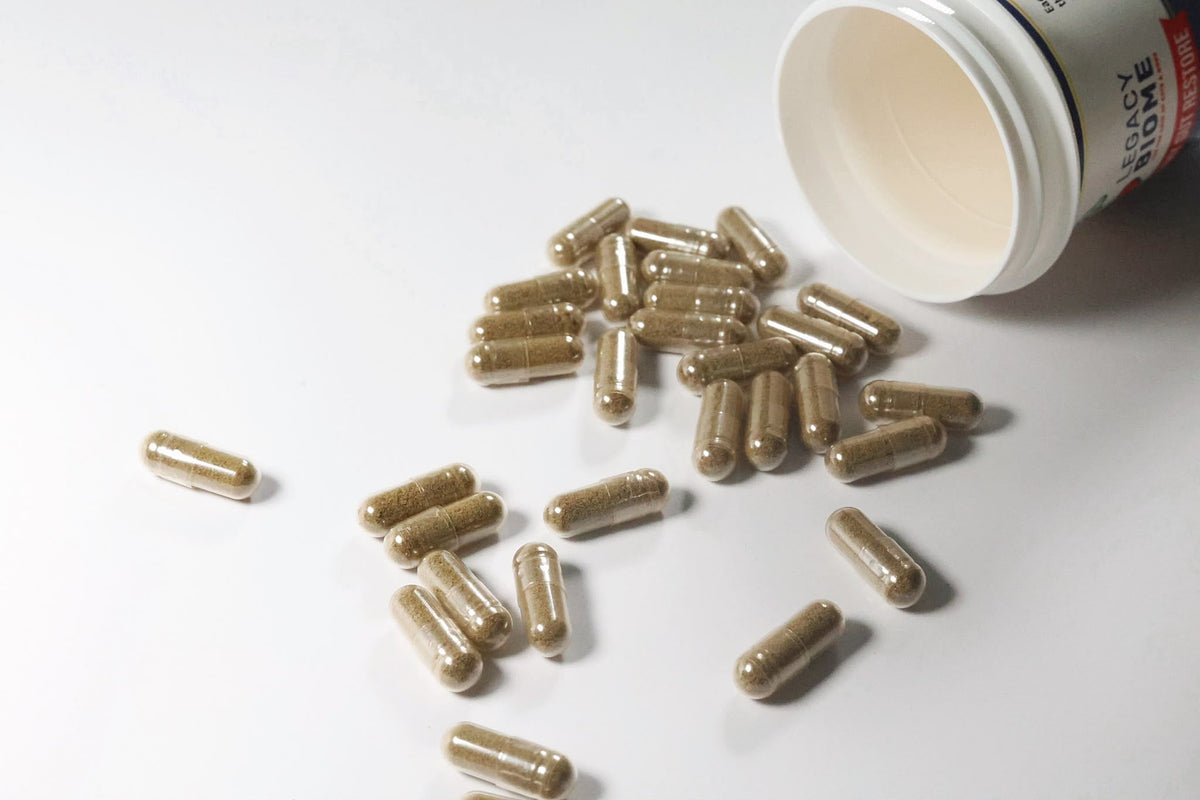
The capsules are free from GMOs and gluten, shelf-stable for up to two years, and simple to administer at home. Speak with your veterinarian before starting, particularly if your dog has severe dysbiosis, immune system concerns, or complex clinical symptoms.
Where the Evidence Leads: The Future of FMT
The research on fecal microbiota transplantation in dogs points in a consistent direction.
It works best for dogs with measurably disrupted gut microbiota who have not responded to dietary management alone. It works fastest and most dramatically in acute conditions like canine parvovirus infection. It benefits most from repeated dosing rather than a single enema. And it is only as good as the donor.
Legacy Biome's Healthy Gut Restore is built on that last principle, because the clinical outcome of fecal microbiota transplantation is determined before the capsule is ever opened, in the life the donor lived and the microbiome they protected.
Understanding Why Results Vary Across Studies
One thing that strikes most people when they read the FMT literature is how different the results look between studies.
A retrospective case series shows 75% improvement. A randomized controlled trial shows no significant difference between FMT and diet alone. How can both be true?
The answer lies in three variables that differ dramatically across studies: the severity of the enrolled dogs, the donor quality used, and the number of FMTs the dogs received.
Retrospective studies tend to include dogs with more severe and refractory conditions, dogs with chronic enteropathy who have already failed multiple treatments. These are the dogs with the most disrupted gut microbiota, and they are exactly the patients where FMT produces the clearest benefit.
Randomized controlled trials, by contrast, often enroll dogs at the point of diagnosis, before dietary management has been given time to work. Many dogs with chronic enteropathy are food-responsive, meaning a hydrolyzed protein diet or novel protein diet alone will resolve their clinical symptoms. When FMT is added to a dietary intervention in these dogs, it has less room to demonstrate additional benefit because the diet is already doing most of the work.
This distinction has major implications for how you interpret the evidence and for identifying whether your dog is likely to benefit.
If your dog has already tried a protein diet for eight to twelve weeks and is still dealing with chronic diarrhea, severe dysbiosis confirmed by the gastrointestinal laboratory, and clinical signs that have not resolved, they are much closer to the retrospective study population.
That is the dog most likely to benefit from fecal microbiota transplantation.
The Atopic Dermatitis Connection: Gut Health Beyond the Gut
Most pet parents associate FMT with digestive conditions. The research extends further.
Dogs with atopic dermatitis consistently exhibit a measurably distinct fecal microbiota compared with healthy dogs, with lower bacterial diversity and higher levels of pathogenic bacteria. The gut-skin axis is well documented. When the intestinal microbiome is disrupted, immune dysregulation does not remain confined to the GI tract. It surfaces on the skin.
A 2023 pilot study published in Scientific Reports evaluated oral fecal microbiota transplantation in 12 dogs with atopic dermatitis over 56 days and found significant reductions in both lesion severity and pruritus scores, with the fecal microbiota shifting toward the composition of healthy dogs alongside clinical improvement.
The clinical efficacy seen in this study adds an important dimension to the FMT conversation.
For dogs on long-term allergy medications whose skin conditions keep cycling back, the gut microbiome is worth investigating as a contributing factor. Fecal bile acids, short-chain fatty acids, and the microbial composition that produces them all play a role in regulating the immune responses that drive atopic disease.
This is not a replacement for dermatology consultation. But it is a biologically grounded reason to assess microbial composition alongside skin-focused treatment in dogs with chronic inflammatory conditions.
Practical Guidance: When to Talk to Your Vet About FMT
Not every dog with diarrhea needs fecal microbiota transplantation.
But some dogs absolutely do, and knowing when to push for it as part of your dog's care plan can make the difference between years of cycling through treatments and a genuine resolution.
Consider asking your veterinarian about FMT if your dog:
- Has been diagnosed with chronic enteropathy and has not improved after eight to twelve weeks on a hydrolyzed protein diet or novel protein diet
- Has a documented dysbiosis index score above the reference range from the gastrointestinal laboratory
- Has been through multiple antibiotic treatment courses and keeps relapsing
- Is recovering from canine parvovirus infection and needs gut microbiome restoration as part of the recovery protocol
- Has chronic diarrhea that does not respond to diet changes and for which no underlying cause has been identified
- Has atopic dermatitis or recurrent skin conditions alongside digestive symptoms
Dogs presenting with these clinical signs alongside measurable gut microbiome disruption are the patients for whom the evidence is strongest and for whom the clinical outcome of sustained use of an oral FMT capsule is most likely to be meaningful.
Veterinary clinical sciences have advanced considerably in this area, and a vet familiar with current clinical guidelines can discuss whether the dysbiosis index, fecal microbiome assessment, and FMT dosing protocols are appropriate for your dog's specific situation.
The vet intern med literature on this topic has expanded substantially in the past three years, and awareness among clinicians continues to grow as more companion animal data becomes available.
Fix the Gut, Transform Your Dog's Health
The research on fecal microbiota transplantation in dogs is no longer preliminary. It is establishing FMT as a meaningful clinical tool for chronic enteropathy, recovery from canine parvovirus infection, inflammatory bowel disease, and conditions associated with measurable disruption of the gut microbiome.
For dogs that have exhausted dietary management and standard care without resolution, it offers something no probiotic or antibiotic course can: a complete microbial community sourced from a donor whose gut was never compromised.
Legacy Biome exists to make that standard accessible, with donors screened to the highest microbiome-quality criteria available and FMT capsules that bring clinical-grade restoration home. Fix the gut, and everything else follows.
Frequently Asked Questions About FMT for Dogs
Can I give my dog FMT capsules at the same time as antibiotics?
No, giving FMT capsules alongside antibiotics is not recommended because antibiotics actively deplete the bacterial populations FMT aims to establish. The transplanted microbial community needs time to take hold without interference. Most clinical guidelines recommend completing the antibiotic course first, then beginning fecal microbiota transplantation once the antibiotic treatment has cleared your dog's system.
Can I use FMT alongside my dog's existing diet without changing it?
Yes, you can give your dog FMT capsules without changing their current diet, though a high-protein, low-carbohydrate diet with adequate prebiotic fiber provides a better environment for the transplanted microbial community to establish itself. If your dog is already on a hydrolyzed protein diet or novel protein diet prescribed by your vet, continuing it alongside FMT is appropriate and supports clinical outcome.
Does FMT work better than probiotics for dogs with chronic diarrhea?
Yes, FMT is more effective than probiotics for dogs with severe chronic diarrhea and documented dysbiosis because it transfers thousands of bacterial species, including missing bacteria that no probiotic supplement can replicate. Retrospective case series show clinical improvement in 75-80% of dogs with chronic enteropathy who receive FMT after standard care has failed.
Is FMT safe if my dog has inflammatory bowel disease and is already on steroids?
Yes, FMT is safe as adjunctive therapy alongside corticosteroid treatment in dogs with inflammatory bowel disease, because it addresses gut microbiome composition rather than interacting with the drug itself. Clinical trials evaluating FMT in dogs with IBD on concurrent corticosteroid and hydrolyzed protein diet protocols have not reported serious adverse events attributable to the treatment.
What makes an oral FMT capsule effective for home use?
An effective oral FMT capsule needs an enteric coating that protects the fecal microbiota from stomach acid, freeze-dried fecal material that maintains viable microbial diversity, and donor feces from clinically healthy dogs who have passed full infectious disease screening and microbiome quality assessment. Research confirms that oral fecal microbiota transplantation via properly formulated capsules achieves clinical outcomes comparable to in-clinic retention enema procedures.


Leave a comment
This site is protected by hCaptcha and the hCaptcha Privacy Policy and Terms of Service apply.