

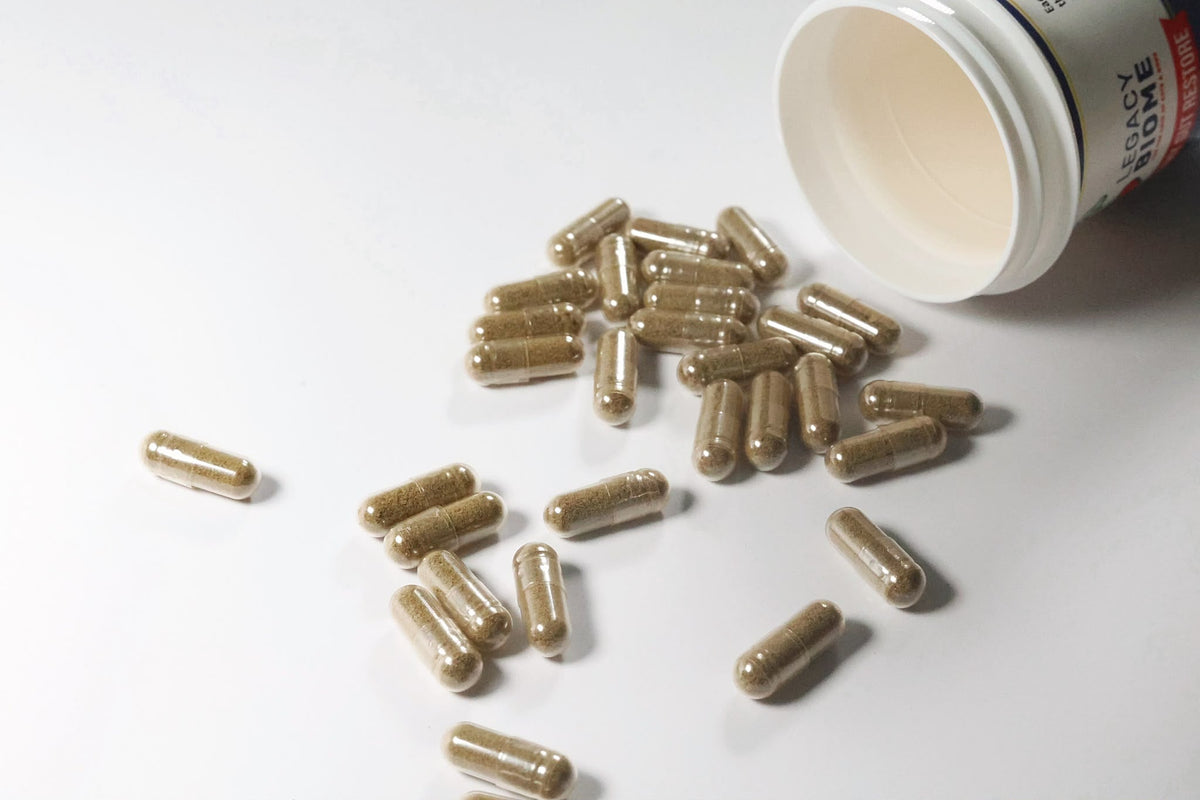
If your dog keeps dealing with loose stools, recurring diarrhea, bad breath, or unexplained skin issues, there is a good chance the gut is where the problem starts. A dog gut health supplement can make all the difference, but not all of them work the same way. Some add a handful of live bacteria. Others rebuild the entire microbial community from the ground up. This guide breaks down what different supplements actually do, when to use each one, and how to choose what is right for your pup.
What Does a Gut Health Supplement Actually Do?
Most pet owners reach for a supplement after something has already gone wrong: a course of antibiotics, a stressful event like boarding or a move, or a pattern of digestive issues that does not seem to go away. The goal of any gut health supplement is to support a desirable intestinal microbial balance, protect the gastrointestinal system, and help your dog's body do what it is supposed to do.
Think of your dog's gut like a garden. Healthy gut bacteria are the plants. Harmful bacteria are the weeds. A supplement's job is to nourish the plants, crowd out the weeds, and create the right soil conditions for everything to grow back properly after something has disrupted it.
The main types of gut health supplements for dogs include the following.
- Probiotics: Live beneficial microorganisms that support digestion, immune health, and stool quality
- Prebiotics: Dietary fibers that nourish good bacteria already living in the gut
- Digestive Enzymes: Compounds that help break down food and maximize nutrient absorption
- Combination Products: Gut health supplements that combine probiotics, prebiotics, and enzymes in one formula
- FMT Capsules: Freeze-dried donor fecal material in an enteric-coated capsule that transfers thousands of bacterial species into your dog's gut at once, reseeding the entire microbial community rather than adding individual strains
Are Dog Probiotics Right for Your Pet?
Probiotics for dogs are the most widely used gut health supplement, and for good reason. They introduce live cultures of beneficial microorganisms directly into the digestive tract, where they help crowd out bad bacteria, reduce intestinal inflammation, and support the immune system. About 70% of a dog's immune system lives in the gut, which means a healthy gut microbiome is central to immune health across the entire body.
A 2025 study found that Enterococcus faecium Kimate-X reduced stress hormones in dogs during transport and improved the balance of microbial communities in their intestines, showing that the benefits of dogs' probiotics extend well beyond digestion into behavioral well-being. Enterococcus faecium is one of the best-studied probiotic strains for dogs and appears in many veterinary-formulated products because of its consistent impact on fecal quality and digestive health.
When choosing a probiotic for your pup, look for the following.
- Canine-specific probiotic strains rather than human formulas
- A clear CFU count, ideally between 1 and 10 billion per serving
- An expiration date and listed species on the label
- No artificial sweeteners, fillers, or unnecessary additives in the formula
- Probiotic chews, powders, or capsules with verified live cultures at time of use
Probiotics work best when introduced consistently over several weeks rather than as a short course. They are also most effective when started before a stressful event, such as travel or a change in routine, rather than after symptoms have already appeared.
What Are Prebiotics and Why Do They Matter?
If probiotics are the plants, prebiotics are the fertilizer. Prebiotics are dietary fibers that pass through the stomach undigested and reach the intestines, where they nourish good bacteria and help them thrive. They are usually found in high-fiber foods like pumpkin, chicory root, and oats, and they play a vital role in supporting the growth of beneficial microorganisms that produce short-chain fatty acids.
Short-chain fatty acids are one of the most important outputs of a healthy gut. They nourish the cells lining the intestines, reduce intestinal inflammation, and help maintain the gut barrier that keeps potential pathogens and harmful bacteria out of the bloodstream. Without enough dietary fiber to feed the good bacteria, short-chain fatty acid production drops and the gut lining becomes more vulnerable.
Many gut health supplements for dogs now combine prebiotics and probiotics in one formula. This makes practical sense: the probiotic adds new live bacteria, and the prebiotic gives those bacteria something to eat once they arrive. For puppies especially, who are still developing their gut microbiome, this combination can make a meaningful difference to long-term digestive and immune health.
What Do Fermented Foods Like Yogurt and Kefir Do as Supplements?
Some pet owners prefer to support their dog's gut health through food rather than capsules, and fermented foods are worth knowing about. Plain unsweetened yogurt and kefir both contain live cultures that can benefit the gut microbiome. They introduce a broader range of live bacteria than many commercial probiotic supplements and are generally well-tolerated by most dogs in small amounts.
A teaspoon mixed into meals is a practical starting point. The key things to avoid are yogurt or kefir products with added sugar, artificial sweeteners, flavoring, or high salt content, as these can disrupt the gut microbiome rather than support it. Kefir tends to have a higher diversity of live cultures than yogurt, which makes it a slightly richer source of beneficial bacteria for dogs that tolerate dairy well.
Fermented foods are not a substitute for a targeted supplement in dogs with serious digestive health issues, but they are a convenient and accessible way to support ongoing gut maintenance as part of everyday meals.
How Does Gut Health Affect Digestion, Immune Health, and More?
Many dogs with gut issues show symptoms that seem completely unrelated to digestion. Bad breath, itchy skin, recurring ear infections, and food allergies can all trace back to what is happening in the gastrointestinal tract. When harmful bacteria outnumber good bacteria in the gut, the resulting imbalance drives intestinal inflammation that does not stay local. It spreads.
A healthy microbiome helps block potential pathogens, regulate immune responses, and prevent the gut lining from becoming permeable. When that barrier breaks down, food particles and bacteria cross into the bloodstream and trigger immune reactions. This is one of the core mechanisms behind food allergies and food sensitivities that seem to get worse over time even when your dog's diet has not changed.
A randomized controlled study found that Enterococcus faecium supplementation reduced intestinal inflammation markers in dogs with food-responsive chronic enteropathy, suggesting that targeted probiotic support can help reduce the immune overreaction that drives chronic immune system and digestive health problems in dogs.
Digestive and immune health are not separate systems in your dog's body. They are the same system, and supporting one almost always benefits the other.
When Is a Probiotic Not Enough? Understanding FMT
Standard dog probiotics add a limited number of probiotic strains to the gut. For many dogs, this is sufficient support. But for dogs with chronic diarrhea, severe dysbiosis, or a gut microbiome that has been repeatedly stripped by antibiotics, a few probiotic strains are not enough to rebuild a well-functioning microbial community.
This is where fecal microbiota transplantation takes a fundamentally different approach. Rather than supplementing with a handful of live bacteria, FMT transfers an entire ecosystem of healthy gut microbes from a screened donor directly into your dog's intestines through an oral capsule. The result is a far more complete restoration of the microbial diversity that standard probiotics simply cannot replicate.
Severely immunocompromised dogs should always consult a veterinarian before starting any gut supplement, including FMT. For other dogs, the decision usually comes down to severity. For example, mild digestive issues respond well to probiotics and prebiotics, while ongoing digestive issues that keep returning despite standard treatment are often better addressed with donor-based therapy.
What to Look for in a Gut Health Supplement for Dogs
Here is what actually matters when you are reading a label or choosing between products.
- Species specificity: Canine-specific probiotic strains are more effective for dogs than human formulas. The gut microbiome of dogs differs significantly from humans, and beneficial microorganisms selected for human digestion may not colonize a dog's intestines as effectively.
- Verified live cultures: A probiotic is only useful if the bacteria are alive at the time your dog eats it. Check for an expiration date, storage requirements, and a CFU count guaranteed at the end of shelf life rather than at manufacture.
- No artificial sweeteners: Some probiotic chews and flavored powders contain artificial sweeteners that disrupt gut bacteria. Always check the ingredient list.
- Transparent sourcing: For FMT products specifically, donor sourcing is the most important factor. Donors should have zero lifetime antibiotic use, clean pathogen screening results, and a documented diet.
- Veterinarian involvement: Whether you are choosing probiotic chews or an FMT capsule, a product developed with veterinary guidance and reviewed by a veterinarian is a meaningfully safer choice than one that has not.
Legacy Biome: When Your Dog Needs More Than a Supplement
For dogs that have tried probiotic chews, powders, and dietary changes without lasting relief, Legacy Biome's Healthy Gut Restore capsules take a different approach entirely.
Each capsule delivers freeze-dried donor material sourced from dogs with zero lifetime antibiotic use, raised without NSAIDs, pesticides, or chemical treatments, fed raw animal proteins and fresh organic foods, from a stable multi-generational lineage with routine pathogen screening and DNA sequencing.
The capsules are free from GMOs and gluten, shelf-stable for up to two years, and simple to give at home without a vet visit for each dose. For pet parents managing a dog with stool quality issues, chronic loose stools, gastrointestinal upset that keeps coming back, or a gut that never recovered after antibiotics, this is the intervention that goes to the root of the problem rather than managing its surface.
Donors are also minimally vaccinated and naturally born, supporting strong microbiome development from the earliest stage of life. The enteric coating on each capsule protects the microbial content from stomach acid so it reaches the digestive tract and intestines intact, where it can actually get to work. For dogs whose digestive system and immune system have both taken a hit from years of processed dog foods, antibiotic courses, or chronic illness, that delivery matters as much as what is inside the capsule.
Better Gut, Healthier Dog: What Legacy Biome Makes Possible
Your dog cannot tell you their gut is struggling. But loose stools, bad breath, low energy, and recurring skin issues are their way of showing you something is off. The right supplement does not just mask those signs. It addresses what is driving them. For dogs that need daily maintenance, probiotics and prebiotics are a solid foundation. For dogs that need a genuine reset, Legacy Biome's Healthy Gut Restore delivers a complete donor microbiome that gets to the root of the problem rather than managing its surface.
Frequently Asked Questions
Can dogs take human probiotics for gut health?
No, dogs should not routinely take human probiotics because human probiotic strains are not optimized for a dog's gastrointestinal system and may not colonize effectively. Canine-specific probiotic strains like Enterococcus faecium are better suited to a dog's gut and more likely to benefit their digestive and immune health.
How long does it take for a dog probiotic to work?
Most dogs show improvement in stool quality and digestive health within one to two weeks of consistent probiotic use, though dogs with more serious gut imbalances may take four to six weeks to show measurable improvement. FMT can produce noticeable changes in days to weeks, with full resolution taking two to three months in chronic cases.
Are gut health supplements safe for puppies?
Yes, gut health supplements including probiotics and prebiotics are generally safe for puppies and can support the development of a healthy gut microbiome during a critical growth period. Always choose a veterinarian-approved formula and introduce any new supplement gradually, watching for gastrointestinal upset or loose stools as you increase the dose.
When should I use FMT instead of a standard probiotic?
FMT is the better choice when your dog has chronic diarrhea, repeated gastrointestinal upset despite probiotics, a gut that has not recovered after antibiotics, or serious digestive disorders like inflammatory bowel disease, because it restores microbial diversity at a scale that probiotic strains alone cannot achieve.


Leave a comment
This site is protected by hCaptcha and the hCaptcha Privacy Policy and Terms of Service apply.