

Your dog's gut is home to trillions of microorganisms that regulate digestion, immunity, skin health, and behavior. When that community collapses, the effects of the imbalanced gut microbiome show up everywhere, and no amount of dietary tweaking or antibiotic treatment can rebuild what has been lost at the microbial level.
Fecal microbiota transplantation does something fundamentally different. It transfers a complete, living gut ecosystem from a healthy donor directly into your dog via a capsule that reseeds the microbiome rather than patching it. This guide covers how fecal microbiota transplantation for dogs works, what the evidence says, and what to know before getting started.
What Exactly Is a Fecal Microbiota Transplant?
Most medical treatments work by removing something harmful or adding something specific. Fecal microbiota transplantation, or FMT, does neither. It works by replacing an entire microbial community, importing thousands of healthy bacteria, beneficial microorganisms, secondary bile acids, and other gut microbes from a healthy donor into the recipient's gut in a single intervention.
The scientific term is fecal microbiota transplantation. The older term, still used in large animal veterinary medicine, is transfaunation. The concept has been around far longer than most people realize. The earliest documented use of fecal material to treat gastrointestinal illness dates to 4th-century China, where a preparation called yellow soup was administered to patients with severe diarrhea.
In Europe, veterinary applications date to the 17th century, when the Italian surgeon described transferring gastrointestinal contents between healthy and sick animals to restore gut function. Cattle and horses have been treated with transfaunation for centuries.
What changed in modern companion animal medicine is the ability to screen donor fecal material for pathogens, confirm microbial diversity through DNA sequencing, and deliver the material safely via oral capsules rather than requiring an invasive in-clinic procedure.
How Is Fecal Transplant Different From a Probiotic?
This is the question most pet parents ask first, and the answer matters a lot for choosing the right approach for your dog.
A probiotic delivers a fixed set of bacterial strains, usually somewhere between one and ten species, in a dose you give your dog regularly. Those strains provide temporary support and can help maintain a healthy gut environment or ease mild digestive disruption. The key word is temporary. Most probiotic bacteria do not permanently colonize the intestinal microbiome. They pass through.
A fecal transplant transfers donor feces containing a complete microbial ecosystem. The recipient dog's gut microbiome does not just get a supplement; it gets a new community of microbes that can establish themselves and change the gut microbiome composition in lasting ways.
Clinical guidelines for fecal transplant in companion animals recommend FMT as an adjunctive therapy for canine parvovirus enteritis, acute diarrhea, leaky gut, and chronic enteropathy in both dogs and cats. This marks a significant shift, as FMT is no longer experimental in small-animal internal medicine. It is a recognized clinical tool and has become an increasingly widespread treatment method.
Which Dogs Benefit From Fecal Microbiota Transplantation?
FMT is not a one-size-fits-all treatment, but there are certain conditions where the research consistently points to it as the most effective option. If your dog has been managing a gut condition for months or years without lasting improvement, one of the following categories is likely where they fall.
Chronic Diarrhea and Chronic Enteropathies
Chronic diarrhea that keeps returning despite treatment is one of the clearest indications for fecal transplant in dogs. When a dog's gut microbiome composition has changed significantly after chronic GI disorders, standard interventions like dietary changes and antibiotics address symptoms without correcting the underlying microbial imbalance.
A retrospective case series found that FMT produced clinical improvement in 31 of 41 dogs with chronic inflammatory enteropathies that had not responded to standard treatment, with 26 showing a good response across follow-up periods of three to 41 months. For a condition that is notoriously difficult to manage long-term, that outcome is significant.
A separate case report documented a dog with relapsing diarrhea who had been on ongoing steroid therapy: within 21 days of an oral fecal microbiota transplant, the clinical activity index decreased from mild disease to clinically insignificant, and the dog remained stable for 18 months afterward without an increase in steroid dose.
Inflammatory Bowel Disease
Dogs with canine inflammatory bowel disease (IBD) have an immune system that triggers hyperactive immune responses to their own intestinal bacteria, creating a cycle of inflammation that damages the intestinal walls and depletes the beneficial bacteria needed for recovery. Standard treatment manages the immune response but does not restore the gut microbiome composition driving it.
A study published in Veterinary Medicine and Research Reports documented measurable improvement in clinical symptoms and fecal microbiome. After FMT, clinical symptoms improved, and gut microbial diversity shifted toward what is seen in healthy dogs.
Restoring healthy function at the microbial level, rather than suppressing the immune response with medication alone, is the mechanism that makes FMT relevant for IBD management.
Atopic Dermatitis and Recurrent Ear Infections
Many dog parents are surprised to learn that skin conditions are among the studied indications for fecal microbiota transplant. The connection runs through the gut-skin axis. When the gut microbiome is imbalanced, the immune dysregulation spreads beyond the digestive system and surfaces as skin inflammation, recurrent ear infections, and food allergies.
A 2023 pilot study published in Scientific Reports evaluated oral fecal microbiota transplantation in 12 dogs with atopic dermatitis over 56 days and found a significant reduction in both lesion severity scores and pruritus scores. The gut microbiota of affected dogs was measurably different from healthy dogs at baseline, and FMT shifted the fecal microbiome toward a composition more closely resembling that of healthy cats and dogs without the condition.
For dogs on long-term allergy medication, this is a meaningful finding as the treatment addressed a root cause rather than managing clinical symptoms alone.
Canine Parvovirus Infection
Parvovirus infection causes one of the most acute and severe collapses of the gut microbiome a young dog can experience. Beyond the immediate clinical crisis, the disruption to the intestinal microbiota can persist long after the infection has cleared, setting up a dysfunctional gut environment that contributes to ongoing health problems.
FMT delivered alongside standard treatment has been shown to reduce hospitalization time and speed recovery in puppies with parvovirus, with dogs receiving fecal transplant resolving diarrhea in a median of three days compared to six days for those on standard treatment alone. Those three days matter enormously in a condition where rapid recovery reduces both cost and risk of secondary complications.
How Is FMT Delivered?
There are several ways to deliver fecal microbiota transplantation to dogs and cats, and the method affects both convenience and the depth of delivery into the intestinal tract.
-
Rectal Enema: Donor feces is diluted into a slurry and administered rectally. Effective for acute cases, requires a clinic visit, and works best for conditions involving the large intestine.
-
Colonoscopy or Endoscopy: Allows delivery to a greater depth within the digestive tract under sedation. Used for dogs where deeper delivery is clinically indicated. Requires a specialist referral in most cases.
-
Oral FMT Capsules: Freeze-dried donor feces are encapsulated with an enteric coating. The capsule's enteric coating prevents stomach acid from destroying the microbial content before it reaches the small and large intestine.
Research confirms oral capsule delivery matches the clinical effectiveness of in-clinic procedures, which makes capsule-based fecal microbiota transplant the most practical option for ongoing home administration.
Frozen feces preparations are also used in some clinical settings, allowing storage for later use without requiring fresh processing each time. Freeze-dried material, as used in capsule products, offers the same benefits with a shelf life of up to two years.
What Makes a Good Fecal Donor?
Fecal donor selection is the primary determinant of whether the transplantation works. Donor feces from an animal with a compromised immune system, a poor diet, or recent antibiotic use will not deliver the diverse, clinically healthy microbiome that makes FMT effective.
Clinical standards for companion animal FMT donors include the following.
- Clinically healthy donor with no gastrointestinal signs for at least four months.
- No antibiotics for a minimum of six months prior to donation.
- Normal body condition score.
- Age between 12 months and 75% of expected lifespan.
- Negative infectious disease screening for intestinal parasites, Salmonella, Campylobacter, Giardia, Cryptosporidium, and Clostridium difficile toxins.
- Fecal samples confirming good stool quality and microbiome diversity via DNA sequencing.
- No history of food allergies, digestive disorders, or immune system issues.
Fecal donors should be rescreened every six months. The quality of the donor microbiome directly determines the diversity and therapeutic value of what the recipient's gut receives.
How Legacy Biome Approaches Fecal Microbiota Transplantation
Legacy Biome builds its donor network around animals whose gut microbiome has been protected at every stage of life. Every donor has zero lifetime antibiotic use, not a six-month clearance period but a complete lifetime.
Donors are raised without NSAIDs, pesticides, or chemical flea and tick treatments, are minimally vaccinated with antibody titer monitoring, are naturally born, and are fed raw animal proteins and fresh organic foods.
They come from a stable, multi-generational lineage selected specifically for gastrointestinal health and microbiome diversity, with routine pathogen screening and DNA sequencing confirming quality before encapsulation. Donors live in enriched environments with regular exercise and social interaction, because overall well-being shapes the microbiome too.
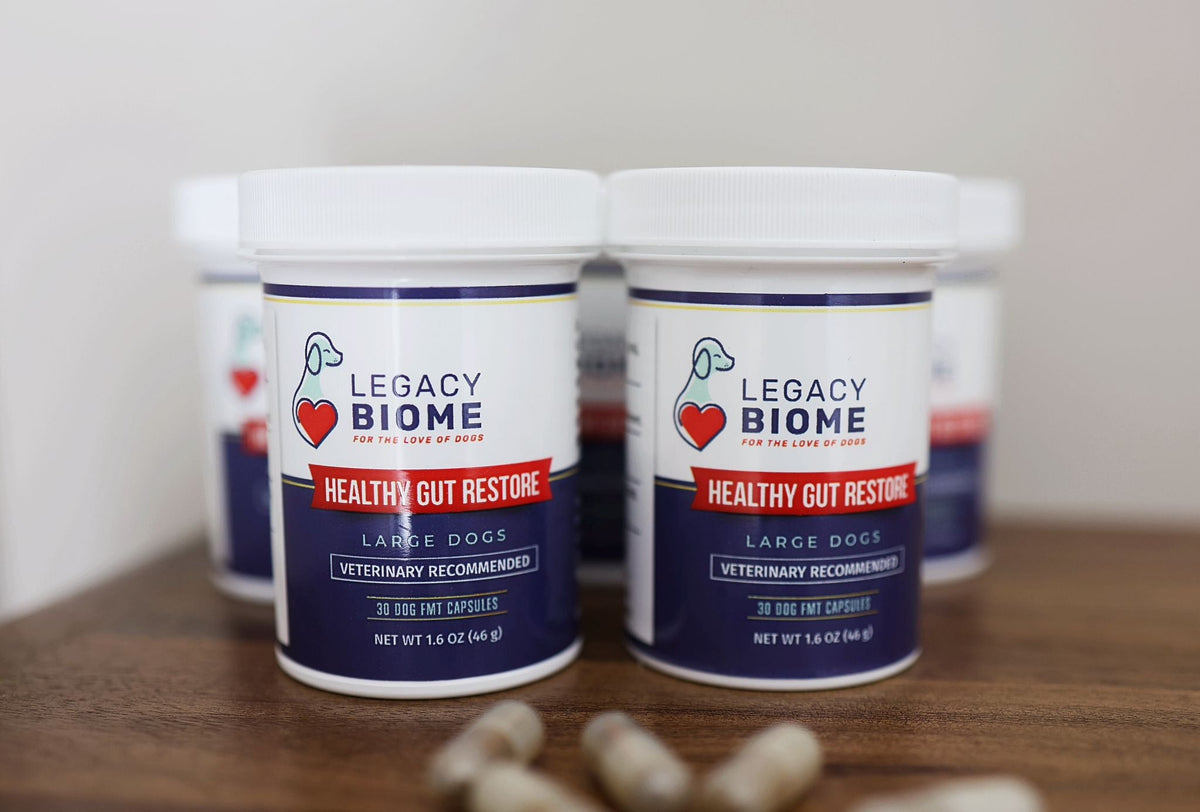
The Healthy Gut Restore capsules are free from GMOs and gluten, shelf-stable for up to two years, and straightforward to give at home. For cats and dogs with chronic enteropathies, post-antibiotic gut collapse, atopic dermatitis, or IBD that has not responded to standard care, the quality of the donor is what determines whether restoration actually happens.
Speak with your veterinarian before starting, particularly for dogs with a compromised immune system or complex health history.
Start With Legacy Biome for a Healthy Gut
FMT is one of the most evidence-backed interventions available for dogs with serious gut health problems, and the oral capsule format has made it genuinely accessible for the first time.
Whether your dog is dealing with chronic diarrhea, post-antibiotic dysbiosis, inflammatory bowel disease, or recurrent skin issues tied to gut imbalance, the science is clear. Restoring the gut microbiome produces measurable clinical improvement.
Legacy Biome's Healthy Gut Restore is built for the dogs that need that level of restoration, with donor standards designed to deliver a microbiome worth transplanting.
Frequently Asked Questions
What is FMT and why is it used in dogs?
FMT is the transfer of donor fecal material into a sick recipient's gut to restore a disrupted intestinal microbiome. It is used in dogs because it restores microbial diversity at a scale that probiotics and dietary changes cannot achieve, making it effective for chronic enteropathies, inflammatory bowel disease, post-antibiotic dysbiosis, and atopic dermatitis.
Is fecal microbiota transplant safe for companion animals?
Yes, fecal microbiota transplant is safe for companion animals when donor feces come from rigorously screened, clinically healthy donors and the product is properly processed. Studies report no serious complications in the majority of cases, with mild transient reactions such as temporary diarrhea occurring in a small percentage of dogs in the first 24 to 48 hours after treatment.
How long does it take for FMT to work in dogs?
FMT typically produces noticeable improvement in dogs within days to weeks for acute conditions, while dogs with chronic enteropathies or long-standing inflammatory bowel disease may take two to three months for more permanent resolution as the transplanted microbial community establishes itself in the recipient's gut and microbiome composition stabilizes.
Can I give my dog FMT capsules at home?
Yes, oral fecal microbiota transplant capsules with enteric coating can be given at home without sedation or a clinic visit, because the capsule protects the donor feces from stomach acid so the microbial content reaches the intestines intact. Speak with your veterinarian before starting, particularly if your dog has immune system issues or is managing a serious health condition alongside gut treatment.


Leave a comment
This site is protected by hCaptcha and the hCaptcha Privacy Policy and Terms of Service apply.