
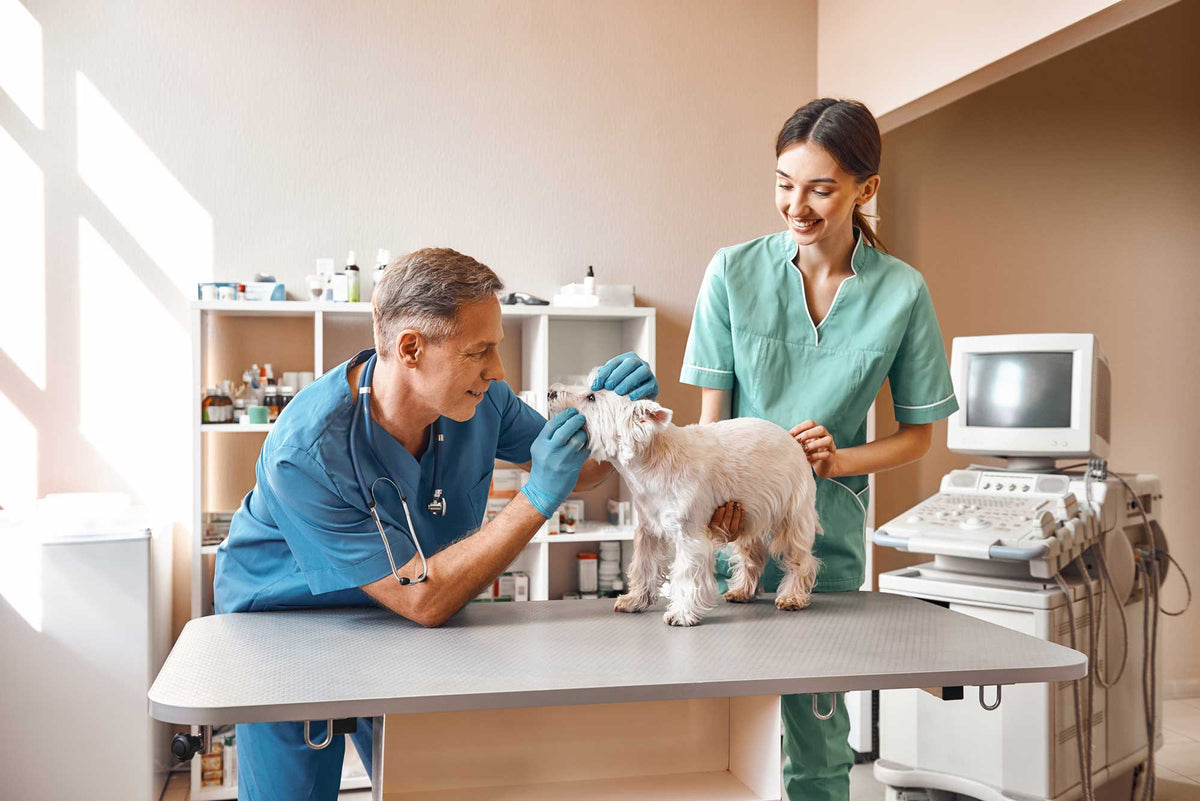
Your dog has been sick for months. You have tried the prescription diet, the medications, maybe even a second opinion. Things improve for a while and then slide back. If this sounds familiar, your dog may have inflammatory bowel disease, and your vet may not have mentioned fecal microbiota transplantation (FMT) yet. This guide explains what IBD is, why standard treatment does not always hold, and what FMT can realistically do for a dog with chronic enteropathy.
FMT in Dogs With IBD: A Growing Treatment for Chronic Enteropathies
Inflammatory bowel disease is a chronic condition in which the gut lining stays inflamed over time, disrupting how the intestines absorb nutrients and regulate the immune response. It sits within a broader category called chronic enteropathies in dogs, GI disorders that persist despite dietary changes and medication.
At the center of that breakdown is the gut microbiome: the living bacterial community that lines the intestinal tract and keeps digestion, immunity, and inflammation in balance. This is where fecal microbiota transplantation comes in.
When the intestinal microbiota of a dog with inflammatory bowel disease is severely disrupted, whether by the disease itself, long-term medication, or repeated antibiotic treatment, the body often struggles to restore that bacterial community on its own.
Fecal microbiota transplantation (FMT) is gaining attention as a potential treatment option. FMT transfers fecal material from a healthy donor dog directly into the recipient's gut. That fecal material carries a complete, living microbial ecosystem.
It carries diverse bacterial populations, short-chain fatty acids that support gut lining repair, and primary and secondary bile acids that regulate inflammation. It is not adding isolated strains. It aims to reintroduce beneficial bacterial populations that are depleted in dogs with IBD.
Fecal Microbial Transplantation: A Step Beyond Standard Treatments
Standard treatments for canine inflammatory bowel disease such as a hydrolyzed protein diet, oral cobalamin supplementation for vitamin B12 deficiency, immunosuppressive drugs, and metronidazole for bacterial overgrowth work well for many dogs. But a significant number of dogs and cats with chronic enteropathies do not respond fully, or they improve and then relapse.
In veterinary medicine, FMT is used as adjunctive therapy alongside standard care. Think of the difference between FMT and a probiotic this way: a probiotic is like sending one repairman into a condemned building. A fecal microbial transplant is like moving an entire functioning neighborhood in. The infrastructure arrives already working, which is why it may help where a single-strain probiotic falls short.
FMT is not a new treatment. It has been used in human medicine for years, primarily to address recurrent gut infections where metronidazole treatment and antibiotics have failed.
Fecal microbial transplantation decreases disease activity by restoring the full microbial ecosystem, which medication alone cannot rebuild.
Microbiota transplantation in dogs is an emerging area in veterinary medicine, and small animal practitioners' awareness of it is growing. It is now used in clinical practice for dogs and cats with chronic GI disorders that have not responded to conventional management, and researchers continue investigating fecal microbial transplant use across a wider range of conditions in companion animals.
Does Your Dog Have IBD? How to Know
Recognizing the signs of inflammatory bowel disease (IBD) can help you know when your dog needs veterinary attention, FMT, or conventional treatment, especially when digestive symptoms keep returning or fail to improve.
Clinical Signs of IBD in Dogs
The clinical signs of canine inflammatory bowel disease depend on where the inflammation is in the GI tract. Stomach involvement typically produces chronic vomiting. Intestinal involvement produces chronic diarrhea.
Many dogs present with both. Acute diarrhea that keeps recurring, rather than resolving cleanly, is also a common pattern in dogs with chronic enteropathies.
Watch for:
- Chronic diarrhea lasting more than a few weeks
- Recurrent acute diarrhea that never fully clears
- Chronic vomiting that comes and goes
- Weight loss despite eating normally
- Poor appetite, or a voracious appetite because nutrients are not being absorbed
- Lethargy and low energy
- Abnormal stool: loose, mucousy, or blood-tinged
If these clinical symptoms have been going on for more than a few weeks, that is the threshold where a full vet workup makes sense. A healthy stool is one of the clearest signals of gut health, and knowing what normal looks like helps you catch changes early.
What Causes IBD in Dogs?
In most cases, an exact cause is never identified, which is why the clinical term is often idiopathic inflammatory bowel disease.
What vets do know is that a combination of factors tends to be involved: an adverse reaction to a specific dietary protein, a disrupted fecal microbiome, bacterial or parasitic infection that triggers lasting inflammation, or a genetic predisposition in certain breeds.
How IBD Is Diagnosed
Veterinarians confirm IBD through a tissue biopsy. Depending on which part of the GI tract is affected, this may require endoscopy (for the stomach or colon) or abdominal surgery when deeper parts of the small intestine need sampling.
Alongside biopsy, most vets run blood panels and fecal samples to rule out parasites and infection. Many also run a dysbiosis index, which assesses microbial balance in the gut.
A dysbiosis index score gives your vet a picture of how disrupted the gut microbiome is. FMT effectiveness in dogs depends on the extent of their gut microbiome imbalance. Dogs with moderate dysbiosis tend to respond better to FMT than those presenting with severe dysbiosis at baseline, which is one reason early intervention matters more than waiting until the gut has fully collapsed.
Is Your Dog a Candidate for FMT?
FMT is most appropriate for dogs presenting with chronic GI disorders that have not resolved with standard treatment. If two or more of the following apply, it is worth raising FMT with your vet.
- My dog has been diagnosed with inflammatory bowel disease or chronic enteropathy
- My dog has had chronic diarrhea or chronic vomiting for more than a few weeks
- My dog has been through a hydrolyzed protein diet trial without full resolution
- My dog has had antibiotic treatment, and symptoms returned afterward
- My dog's gut symptoms came back after finishing probiotics or prescription food
- My vet has mentioned dysbiosis
- My dog has chronic gastrointestinal signs that respond and then relapse
Fecal Microbiota Transplantation vs Standard Treatment: Quick Reference
For dogs with enteropathy, the choice is rarely either/or, but understanding what each approach targets helps set realistic expectations before treatment begins.
| Standard Treatment | FMT (Adjunctive) | |
| What it targets | Inflammation, specific bacteria, nutrient deficiency | Gut microbiome as a whole |
| Response timeline | Days to weeks | 12 weeks (chronic); 3-7 days (acute flare) |
| Suitable for relapsing cases | Sometimes | Yes, particularly suited to non-responders |
| Addresses dysbiosis directly | No | Yes |
| Restores gut bacterial community | No | Yes |
| Used alongside other treatment | Yes | Yes, adjunctive, not a replacement |
Research and Clinical Outcome for Chronic Enteropathies in Dogs
The evidence for FMT in dogs with chronic enteropathies is encouraging, particularly for dogs who have already failed standard treatment. Most clinical trials in this area focused on chronic inflammatory enteropathy to assess microbial restoration as a therapeutic approach.
In a study, dogs with chronic enteropathy received FMT and were followed for clinical response. Disease activity scores (CCECAI) dropped from a median of 8 before treatment to 3 within the first week, and fell further to 1 by Day 30, a clinical outcome that held for an average of around 10 weeks.
Beyond chronic enteropathy, FMT has also been studied in dogs with canine parvovirus infection, where a randomized trial found faster resolution of diarrhea and shorter hospital stays when FMT was added to standard veterinary care.
Most studies use small datasets and clinical effects aren't fully predictable, but across the published evidence, no serious adverse effects were reported. Some dogs had mild, transient gastrointestinal signs that resolved on their own.
The consistency of that safety profile, alongside the responder rates and the clinical outcomes, is what makes fecal microbiota transplantation worth raising with your vet if standard treatment has not held.
Is FMT Safe for Dogs With IBD?
FMT is generally considered safe for dogs when the fecal material is properly screened. All side effects reported in studies were self-limiting, meaning they resolved without additional treatment. The most common short-term responses were mild loose stools or brief GI upset as the gut adjusted.
The main safety variable is donor quality. Fecal samples from healthy dogs used as donors must be screened for Salmonella spp., Clostridium difficile infection, intestinal parasites, and other pathogens before use.
A donor with an undetected infection can pass it to the recipient, which is why sourcing matters as much as the procedure itself. For a full breakdown of what to expect, this guide covers FMT safety and side effects in dogs in detail.
What to Expect After Microbiota Transplantation in Dogs With IBD
Recovery after fecal microbiota transplantation is gradual, and the timeline depends on whether your dog has an acute flare or a long-standing chronic condition. Our guide to how long FMT takes to work in dogs breaks down timelines by condition.
For dogs with acute diarrhea or a recent flare, early signs of improvement are firmer stools, more energy, and better appetite, which can appear within three to seven days. These dogs tend to respond faster because the gut microbiome has not been disrupted for as long.
The timeline is different for long-standing canine inflammatory bowel disease or chronic enteropathies in dogs. The gut has been off balance for months, sometimes longer, and it takes more time to rebuild with fecal transplant.
Here’s what to expect after FMT.
- Week one: Some dogs show a small shift in energy or appetite, but stool consistency or gastrointestinal symptoms may not change yet. No visible response in week one is normal for chronic cases, but it doesn't mean FMT isn't working.
- Weeks two to four: This is where improvement tends to become visible in dogs with chronic enteropathy. Stool quality, appetite, and energy are the clearest indicators to track. Disease activity scores in the research showed the biggest shifts around Day 30, which aligns with what most owners report in practice.
- Beyond four weeks: For dogs with long-standing IBD, beneficial microbial evolution takes time to consolidate. Expect stool consistency to firm up gradually, appetite to even out, and energy to return before everything fully stabilizes.
- When to call your vet: If your dog’s symptoms persist for two weeks, return after initially improving, or become more severe, arrange a veterinary review. Your vet can reassess the treatment plan and determine whether adjustments to the timing or donor material are needed.
Legacy Biome's Healthy Gut Restore for Dogs With IBD
Legacy Biome's Healthy Gut Restore oral capsules are designed for chronic enteropathies in dogs who need sustained gut microbiome support at home. Donor dogs come from a multi-generational lineage selected for gut health and are raised on raw animal proteins and fresh organic foods, which directly shape fecal microbial diversity.
Every donor is routinely screened for pathogens and DNA sequenced. The oral capsules are enteric-coated so the fecal material survives stomach acid and reaches the intestinal tract intact.
These are shelf-stable, GMO-free, and designed for weeks of at-home oral fecal microbiota transplantation without clinic visits. If your dog has IBD and standard treatment has not been enough, this is worth a conversation with your vet.
Frequently Asked Questions
How is FMT given to a dog with inflammatory bowel disease?
FMT can be administered as a retention enema in a clinic setting, where donor fecal microbiota is diluted and introduced into the lower GI tract. Oral capsules are an at-home alternative that deliver fecal microbiota in an enteric-coated format that survives stomach acid. Your vet can advise on which format suits your dog's situation.
How many FMT treatments does a dog with chronic enteropathy need?
Most dogs with chronic enteropathies do better with two to three courses than a single round. The gut microbiome does not always shift consistently after one treatment, which is why oral fecal microbiota transplantation via oral capsule between sessions helps sustain clinical improvement while the gut stabilizes.
Can FMT help if my dog has already tried everything else?
It can, and that is exactly the population the research has focused on. In Toresson et al. 2023, 31 of 41 dogs with chronic enteropathy showed clinical improvement after fecal microbiota transplantation, none of whom had previously responded to standard treatment. It is not a guaranteed fix, but that track record in treatment-resistant cases makes it worth discussing with your vet.
Does FMT work alongside the medication my dog is already on?
Generally, yes, FMT is used as adjunctive therapy, meaning it works with existing treatment rather than replacing it. Most dogs in studies were already on immunosuppressive drugs or a hydrolyzed protein diet when they received FMT. Your vet may recommend pausing antibiotics beforehand, as these can interfere with how well the donor microbiome takes hold.